I’ve been developing at least five different applications. Almost all of them made it into production. AI helped me move at a pace I couldn’t have managed before, and for a while, that felt like a good enough reason to keep going.
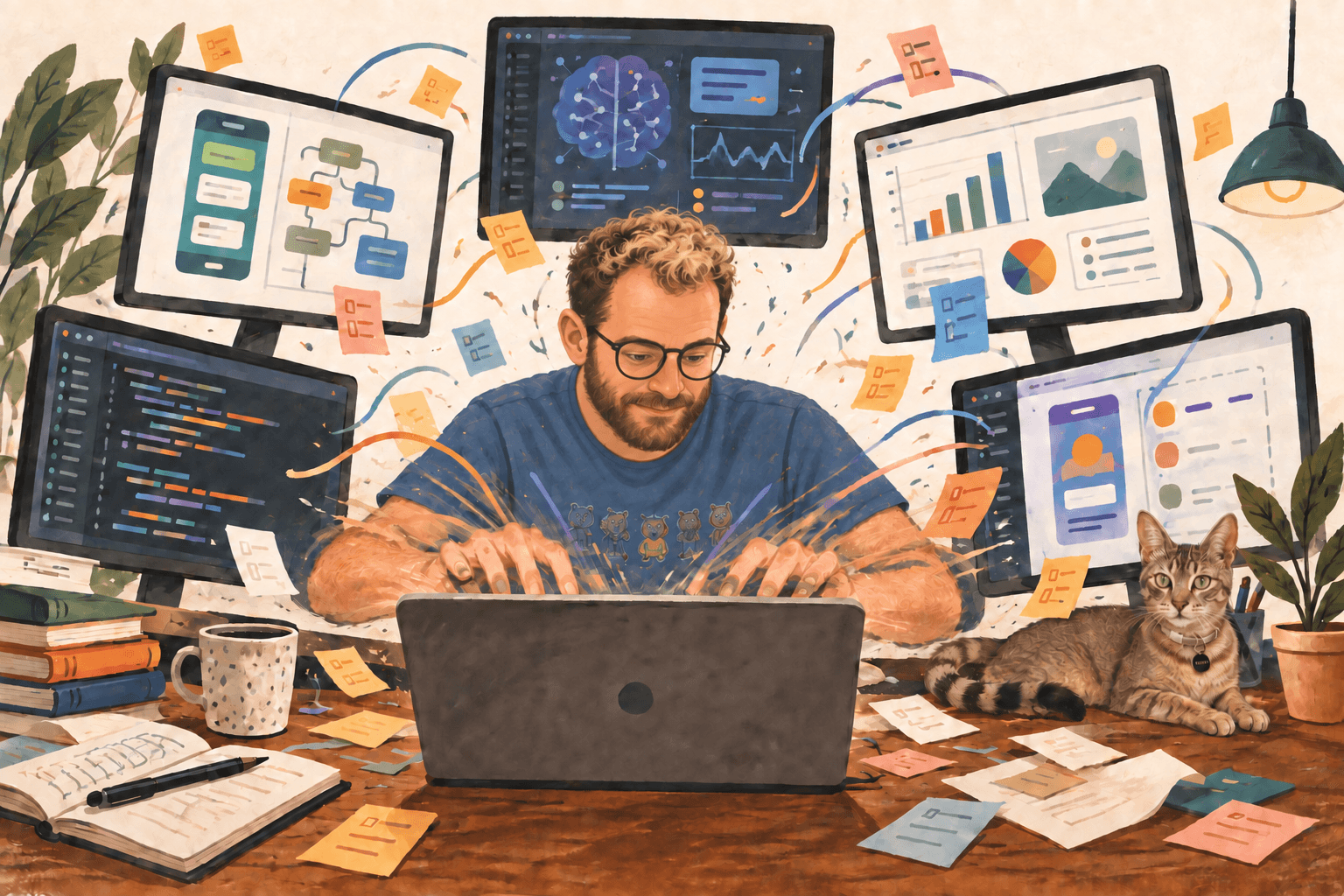
Then I started wondering whether working on all of them at once made any sense.
Getting that much built was satisfying. Each application was real work, and getting almost all of them into production was an accomplishment. But I still had to decide where to put my attention next. Having five places to make progress made that decision harder.
My dad’s advice was simple.
He told me to focus on one thing.
It sounds obvious when I write it down. It was harder to accept while I could see how much I was getting done. AI was accelerating the work, so why shouldn’t I take on more of it?
Because each application still needed decisions from me. What matters next? What can wait? Is this feature worth doing? I could get help implementing the answers, but I was still spreading my attention across all the questions.
My dad’s advice made me reconsider what I was asking that extra speed to do. I’d been using it to work on more things at once. I wanted to use it to give one thing the attention it needed.
I already knew how to do this.
The funny part is that the approach I needed was familiar from before AI became part of my daily work: choose a larger goal, break it into small tasks, and work through them.
It’s the habit I associate with Scrum planning and other agile ways of working. Agree on what we’re trying to accomplish. Make the next pieces small enough to understand and finish. Look at what we’ve done, learn from it, and adjust the remaining work.
Somewhere in the excitement of being able to build so much faster, I’d started treating that discipline as something I could skip. An idea could become a working feature quickly enough that I could start building before deciding whether it belonged in the plan.
I still need a plan when the implementation takes an hour. I still need to know what done means. And I still need to let some ideas wait, even when they would be easy to start.
One big task, small enough steps.
What I want to carry forward is simple:
- Choose one main goal. Be specific about the result I want to reach.
- Break it into small tasks. Each one should have a clear purpose and a clear finish.
- Use AI to help complete those tasks. Keep the work connected to the goal I chose.
- Review before expanding. Finish a useful piece, see what it teaches me, and then decide what comes next.
That also means being willing to leave the other applications alone for a while. It’s uncomfortable when I know I could open any of them and get something done. But the fact that I can make progress somewhere doesn’t tell me whether that’s where my time should go.
I’m glad I built those applications, and I’m grateful to my dad for helping me see that I was spreading myself too thin. I was excited about how much I could build, and his advice helped me step back and think about where I wanted to put my time. I want to take that advice seriously: choose one thing, break it into smaller tasks, and give it the attention it deserves.